


Newsletter: June 2018

It’s a good day to be a Washington Capitals fan! #ALLCAPS #ROCKTHERED! As summer heats up, so do several issues and developments in the housing industry. This week USMI released a new report on how private mortgage insurance (MI) has helped nearly 30 million homeowners nationwide for more than 60 years.  In addition, the Federal Housing Finance Agency (FHFA) received a number of comment letters on its Notice of Regulatory Review process, including from USMI and the Mortgage Bankers Association (MBA), among others. Housing has also been a big topic in Congress lately as the U.S. Senate voted to confirm Brian Montgomery as the new Federal Housing Administration (FHA) Commissioner, and the Senate Committee on Banking, Housing, and Urban Affairs held a hearing on Fannie Mae and Freddie Mac’s (the GSEs) 10 years of conservatorship. And last but certainly not least, June is National Homeownership Month and we recognize the National Fair Housing Alliance, which will host its annual conference next week that celebrates the 50th Anniversary of the Fair Housing Act.

  • USMI releases new report on private MI’s role in homeownership nationwide. USMI released a national report on the role of private MI in all 50 states and the District of Columbia. The report found that nearly 30 million homeowners have been served by MI for more than 60 years, and breaks down low down payment mortgage lending with MI in all 50 states. The report also underscores the historic importance of MI, how MI has helped promote homebuying in the U.S. especially with first-time buyers, and the protections that MI provides to American taxpayers and the federal government. The complete report on MI in the U.S. is available here. All 50 states fact sheets, plus data for the District of Columbia, are available here.
  • Trades, including USMI and MBA, submit comment letters on FHFA Notice of Regulatory Review. This week, USMI submitted a comment letter to the FHFA on its Notice of Regulatory Review as part of the agency’s five-year Regulatory Review Plan, which identifies agency rules that should be changed or modified. In its letter, USMI suggests that FHFA should reassess its “Prior Approval for Enterprise Products” interim final rule for the GSEs, because though the regulation establishes a process for the GSEs to obtain prior approval from the FHFA for new products—and provide prior notice to the FHFA for new activities—the regulation is “unused [since its implementation in 2009] and apparently not fit for purpose.” USMI argues that “new activities and products have the potential to significantly impact many stakeholders in the housing finance ecosystem—GSEs, lenders, private mortgage insurers, borrowers, and the American taxpayer” and therefore “stakeholders should not have to rely on mechanisms that sidestep the Administrative Procedure Act such as ‘requests for input’ to offer feedback on new activities and programs proposed by the GSEs.” Further, USMI notes that since becoming conservator of the GSEs in 2008, FHFA has not addressed the interaction between its regulatory and conservatorship authorities. For these reasons, USMI urges FHFA to “withdraw the Regulation and resubmit a new proposed rule for a formal notice and comment period with additional clarity on the FHFA’s role and authority as conservator and regulator of the GSEs, as well as a workable approach for assessing new activities and products.”As reported by Inside Mortgage Finance (subscription), MBA also submitted a comment letter urging FHFA to require public disclosure on “any notice” of new business activities being planned by the GSEs. Among other things, MBA asks that FHFA specify the factors and metrics it will consider when determining whether a new activity constitutes as a new product or new activity, and specifically calls on FHFA to modify the manner in which it addresses new activities characterized as “pilots.”
  • Brian Montgomery confirmed as new FHA Commissioner. Brian Montgomery, a respected housing expert and seasoned mortgage finance professional, was confirmed in a widely bipartisan vote to serve as President Trump’s FHA Commissioner. Commissioner Montgomery, who previously served as FHA Commissioner in the George W. Bush administration, will be responsible for overseeing the more than $1 trillion of insurance in force at the FHA as well as addressing some of the challenges facing the FHA going forward.Upon Commissioner Montgomery’s confirmation, USMI President Lindsey Johnson released a statement praising the Senate confirmation of the new FHA Commissioner: “USMI applauds the Senate for its bipartisan vote to confirm Brian Montgomery to serve as FHA Commissioner… We look forward to working closely and collaboratively with Commissioner Montgomery to create a more coordinated, consistent, and transparent housing system – a system that can expand private capital’s role in shouldering more risk in front of taxpayers in the housing market.”
  • Senate holds hearing on “Ten Years of Conservatorship” of the GSEs. The Senate Committee on Banking, Housing, and Urban Affairs recently held a hearing entitled “Ten Years of Conservatorship: The Status of the Housing Finance System,” in which FHFA Director Mel Watt testified on the GSEs’ activities over the last ten years under federal control. During his testimony, Director Watt said that FHFA has “worked with the Enterprises to develop a Conservator Capital Framework [CCF] that establishes aligned capital guidelines for both Enterprises across different mortgage loan and asset categories” and that FHFA uses the CCF to assess GSE guaranty fees, activities, and operations. Director Watt suggested that, as regulator, he believes it is important for FHFA to “articulate a view on prudential capital requirements for the Enterprises.” Director Watt suggested that FHFA will release for public comment a proposed rule for post-conservatorship risk-based capital and minimum leverage capital requirements.During the question and answer portion of the hearing, Senator Bob Corker (R-TN) focused on the CCF and asked if Director Watt agreed that “capital for these institutions should be fairly close at least to some of the larger banking institutions.” Senator Corker also spoke to the GSEs’ footprint, suggesting that “there are some areas where it [the footprint] has expanded… We have a situation now where Freddie Mac is now lending, they have become a lender their servicers.” Senator Corker noted “some of the pilot programs over the last five years have actually expanded the role of the two GSEs,” specifically pointing to Fannie Mae’s recent increase in debt-to-income ratios and its “financing Airbnb” as examples of expansions of the GSEs in the marketplace. Senator Corker said, “there has actually been an expansion of mission, and so while we have gotten the portfolios down it appears that instead of trying to decrease the footprint over time, over the last five years we are beginning to, especially in the last couple years, expand the mission.”Senator Pat Toomey (R-PA) asked Director Watt about the recent release of the IMAGIN product into the market place, and specifically “why there was not maybe even a traditional rulemaking process or a period of public comment to consider this.” Senator Toomey also questioned the recent financing of mortgage service companies, noting that “this looks like new kinds of activities, new practices, where we have not seen an explanation, an opportunity to comment and to get public input on.” Director Watt responded that “if I took public comment on every pilot that we did, we would never do any.” Senator Toomey ended his line of questions by asking Director Watt to respond in writing with an explanation for the rationale behind the program.
  • National Fair Housing Alliance celebrates 50th Anniversary of Fair Housing Act. The National Fair Housing Alliance will hold its annual conference next week celebrating the 50th Anniversary of the Fair Housing Act. The conference, titled “The Fair Housing Act at 50: Making Every Neighborhood a Place of Opportunity” will be held June 9 through 12 and aims to bring together thought leaders and experts on civil and human rights, housing, lending, insurance, education, transportation, health, environmental justice, and community development to examine achievements made under the Fair Housing Act. The conference will also observe the current barriers to fair housing and inclusion, and what is on the horizon in the coming years. More information about the events commemorating the 50th Anniversary of the Fair Housing Act can be found here.
Newsletter: December 2017

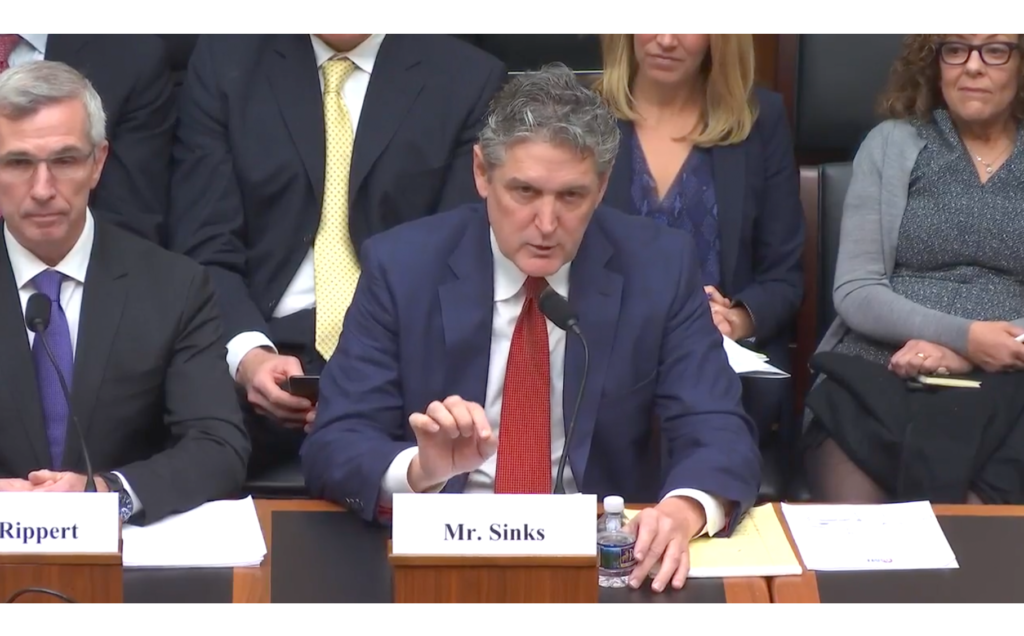
As 2017 wraps up, there continue to be many developments in the housing finance system. On Capitol Hill, recent hearings before the House Financial Services Committee’s (HFSC) Subcommittee on Housing and Insurance featured top experts tackling the most pressing issues in the housing market. USMI Chairman Patrick Sinks (who is also CEO of Mortgage Guaranty Insurance Corp.) testified to discuss the importance of increasing private capital in the housing finance system as Congress considers reform proposals. Ginnie Mae Acting President Michael Bright also testified and touted the value of private capital in the housing market, as well as the value of front-end risk sharing, such as with private mortgage insurance (MI). Separately, HFSC Chairman Jeb Hensarling expressed support for moving forward with bipartisan housing reform. In another notable development on the Hill, the U.S. Senate Banking Committee gave its bipartisan approval for Brian Montgomery to be President Trump’s Federal Housing Administration (FHA) Commissioner. His nomination now goes to the full Senate for consideration. Another significant FHA development is the announcement that its loan limit would increase by roughly 7 percent. America’s Homeowner Alliance Managing Director Tino Diaz wrote a thoughtful op-ed about the FHA’s role in the housing finance system. Diaz’s op-ed highlights the need for the FHA to keep its important risk safeguards in place despite Congressional legislation that seeks to weaken these protections. 

  • USMI Chairman Patrick Sinks Testifies Before Congress in Housing Finance Reform Hearing—Part IV. This week, USMI Chairman and MGIC CEO Patrick Sinks testified on behalf of USMI in front of the HFSC Subcommittee on Housing and Insurance in a hearing entitled “Sustainable Housing Finance: Private Sector Perspectives on Housing Finance Reform, Part IV.” Sinks highlighted the role that private MI has played in the housing finance system, and discussed the MI industry’s performance through the Great Recession, the key improvements made by the industry that make it more resilient going forward, and the industry’s ability to play a larger role in a reformed system. In addition, Sinks proposed specific principles for housing finance reform, lessons that should be applied to all market participants, and recommendations to increase the role of private capital in the housing finance system to further protect taxpayers and ensure borrowers’ continued access to affordable and prudent low-down payment mortgage credit.
     In a statement, USMI President and Executive Director Lindsey Johnson said: “Private MI has been an invaluable piece of the housing finance system for a long time, decades longer than any other low down payment model being tested. Fortunately, our industry is strong and ready to shoulder an even greater responsibility in the system moving forward. We appreciate Congress’ work to address long overdue reforms to the housing finance system and USMI members look forward to continuing and enhancing the credit risk protection MI provides to shield taxpayers from mortgage credit risk and promote homeownership across the country.”

  • House and Senate Seem Poised to Advance Bipartisan Housing Finance Reform. Speaking at a housing finance reform event hosted by the National Association of Realtors (NAR) and S&P, HFSC Chairman Jeb Hensarling (R-TX) expressed support for moving ahead with bipartisan housing finance reform. Alluding to the likely direction that Republicans may pursue for reform, Chairman Hensarling touted the Ginnie Mae model, which builds off proposals promoted by former Ginnie Mae President Ted Tozer, former Federal Housing Finance Agency (FHFA) Acting Director Ed DeMarco, and current Ginnie Mae Acting President Michael Bright.Hensarling specifically said: “I don’t want a government guarantee, I don’t think we need a government affordable housing program but in surveying the political landscape I know they will exist in any bipartisan effort.”  Demonstrating bipartisan support for elements of housing finance reform, Rep. Dan Kildee (D-MI) said, “This is an area of policy where I think the divisions that manifest on this committee might be able to be overcome and I want to encourage the leadership of this subcommittee to continue on that path; as long as we know the direction we are going I think there is enough common ground for us to try to knit together some policy that we can all work together on… in a bipartisan fashion.”
  • Acting Ginnie Mae President Michael Bright Touts Private MI and Increased Risk Sharing.  Ginnie Mae’s Acting President Michael Bright testified before the HFSC in a hearing entitled “Sustainable Housing Finance: The Role of Ginnie Mae in the Housing Finance System.” During his testimony, Bright discussed potential Ginnie Mae reforms, the entity’s financial portfolio, as well as VA loan refinancing. Importantly, Bright was asked several questions by Rep. Ed Royce (R-CA) on the role of private MI in the housing finance system.Bright acknowledged that credit risk transfers at Fannie Mae and Freddie Mac (the “GSEs”) are bringing more private capital into the housing finance system and agreed with Rep. Royce that Ginnie Mae and the GSEs have the legal authority to do more front-end risk sharing. Bright also said that he believes credit risk transfers are the biggest success story in the secondary mortgage market in the last five years, and that anything that can be done to lock in those gains is smart policy.
  • FHA Commissioner Nominee Brian Montgomery Approved by Senate Banking Committee. The U.S. Senate Banking Committee approved Brian Montgomery to be FHA Commissioner in a bipartisan vote of 18 to 5. Montgomery, a longtime housing finance expert who previously served as FHA Commissioner under President George W. Bush, will now be considered by the full Senate for a confirmation vote. Today, 46 housing organizations sent a letter to House and Senate leaders urging that the Senate bring Montgomery’s nomination to the Senate Floor for a vote as soon as possible.USMI has specifically applauded Montgomery’s views that private capital should play a leading role in guaranteeing low down payment mortgage credit risk to protect U.S. taxpayers and the federal government, as well as his previous statement that the FHA “should never take the place of the private sector first-loss solution provided by private mortgage insurers.”
  • America’s Homeowner Alliance Publishes Op-Ed on Need to Retain FHA Risk Safeguards. AHA Managing Director Tino Diaz recently published an op-ed calling for the preservation of FHA risk safeguards in the housing finance system. In his op-ed, Diaz highlights the critical role the FHA has played serving underserved borrowers in the housing finance system, but calls attention to recent misguided efforts to change the FHA’s successful risk protections. Diaz specifically discusses Congressional legislation introduced that seeks to eliminate the FHA’s life of loan mortgage insurance premium (MIP) policy, which is critical to protecting U.S. taxpayers and the federal government from risky FHA loans, all of which are 100 percent government-backed.The op-ed comes the same week the FHA announced that its loan limits will increase in nearly all zip codes across the country—increasing roughly seven percent to $679,650 in many high-cost areas. Diaz’s op-ed takes on even greater importance in light of the FHA’s recent annual report to Congress, which showed the fiscal health of the FHA’s Mutual Mortgage Insurance Fund in a weaker financial position than it was last year and woefully undercapitalized compared to its private sector counterparts. As such, any changes to the FHA’s life of loan policy or reductions to its MIP collection would expose taxpayers and the government to increased mortgage credit risk.

Newsletter: November 2017

As the Thanksgiving holiday nears, there has been a cornucopia of news in housing finance. Here is a roundup of recent news to ensure you stay up-to-date on the latest happenings. In a yearly ritual like the Macy’s Day Parade, the Federal Housing Administration (FHA) released its annual report to Congress highlighting the health of its Mutual Mortgage Insurance Fund (MMIF). In the days leading up to the release of the report, the Heritage Foundation wrote a blog post in opposition to terminating the FHA’s life of loan policy in collecting mortgage insurance premiums (MIP), which a number of groups have sought in recent months. Tax reform has gobbled up much of the news over the past few weeks, and this week the House of Representatives passed its tax reform bill. Finally, just like the abundant feasts of Thanksgiving, the House Financial Services Committee’s (HFSC) Housing and Insurance Subcommittee held Part III of its “Sustainable Housing Finance: Private Sector Perspectives on Housing Finance Reform” hearing series).

  • FHA Releases 2017 Annual Report to Congress. The FHA released its annual report to Congress on the health of its MMIF for 2017 – an important measurement of the FHA’s fiscal strength in the housing finance market. According to the report, the MMIF stands at 2.09 percent, down from 2.35 percent last year and just slightly above the statutory requirement of 2 percent. The report also found that the FHA insures more than $1.2 trillion in mortgage credit risk – an increase from its 2016 annual report. DSNews reported that U.S. Department of Housing and Urban Development (HUD) Secretary Ben Carson is ensuring the public that HUD is working to better the fiscal health of the FHA. Secretary Carson said, “The fiscal health of FHA demands our constant attention and vigilance to ensure we can continue providing sustainable homeownership opportunities to working families without exposing taxpayers to excessive risk. Our duty is clear—we must make certain FHA remains financially viable so future generations can build wealth and climb the economic ladder of success.” In a statement on the FHA’s annual report to Congress, USMI President and Executive Director Lindsey Johnson said: “The FHA has taken important steps in recent years to improve its financial stability after requiring a $1.7 billion government bailout in 2013 when the agency did not have the necessary capital to cover losses, though more needs to be done. With more than $1.2 trillion in mortgage credit risk, the FHA must enhance its financial strength to continue to serve the borrowers who need it the most… Now is the time for the FHA to refocus on its core mission, scaling back from the oversized role it played during the recession so that it can return to serving low-to-moderate income individuals who need the FHA’s 100-percent government backed loans the most.”

  • House of Representatives Passes Tax Reform Legislation. Yesterday, the House of Representatives voted 227 to 205 to pass R. 1, the “Tax Cuts and Jobs Act.” Among many other provisions included in the tax plan, the bill reduces the mortgage interest deduction from $1 million to $500,000 and caps the deduction for property taxes at $10,000. The U.S. Senate will soon vote on its own tax proposal and, if it passes, will go to conference with the House to negotiate a final bill through reconciliation. To read more about USMI’s views on the House’s tax reform bill, please click here.
  • Housing and Insurance Subcommittee Holds Housing Finance Reform Hearing—Part III. A HFSC subcommittee received testimony from representatives of the Milken Institute, American Enterprise Institute (AEI), Moody’s Analytics, Cardiff Consulting Services, and the Urban Institute for housing finance reform. Importantly, former Ginnie Mae President and current Milken Institute Senior Fellow Ted Tozer called for a balanced deployment of government and private capital in support of a fairer and more efficient housing finance system, and also called for the overall reduction of the government footprint as more private capital re-enters the system at different points in the primary and secondary mortgage markets. Tozer’s remarks echo what other housing experts have said about private capital in the housing finance system, which reduces mortgage credit risk to U.S. taxpayers and the federal government.
  • Heritage Foundation Opposes Terminating FHA Life of Loan Premium Coverage. In a recent article, Heritage Foundation scholars John Ligon and Norbert Michel spoke out against terminating FHA MIP, saying that “these changes would be unfair to federal taxpayers that subsidize the cost of the Federal Housing Administration’s insurance program.” The authors specifically mention a recent bill introduced in the House of Representatives that would eliminate the FHA’s current life of loan policy. The authors also urged neither Congress nor the FHA to make any policy changes that would weaken the agency’s ability to cover insurance losses. USMI also opposes reducing FHA’s premium or cancelling FHA’s premiums collected for the life of the loan, because the 100-percent government-backed FHA will continue to hold the same amount of mortgage credit risk while collecting less in insurance premiums, thereby putting taxpayers and the federal government at increased risk. In fact, according to the findings in the FHA’s 2017 annual report to Congress, if the FHA had reduced insurance premiums as planned in January, the MMIF would be at 1.76 percent and undercapitalized. 

Newsletter: June 1027

Here is a roundup of recent news in the housing finance industry. USMI released a paper assessing housing finance reform proposals announced by housing institutions and organizations, the Senate Banking Committee held a hearing on housing finance reform, Genworth Financial introduced its first-ever First-Time Homebuyer Market Report, the Federal Housing Finance Agency (FHFA) submitted its 2016 annual report to Congress, and American Action Forum (AAF) commented on Fannie Mae and Freddie Mac’s (the GSEs) increasingly risky credit portfolios while calling for greater usage of private mortgage insurance (MI).

  • USMI Releases Policy Paper Assessing Housing Finance Reform Proposals. USMI released a paper that assesses a number of reform proposals for the housing finance system. This paper analyzes the various reform proposals put forth by widely respected institutions and organizations through the lens of USMI’s housing finance reform principles, with attention to the role of private capital to protect against taxpayer risk exposure in the proposed new systems. 
  • Senate Banking Committee Holds Hearing on Housing Finance Reform. Edward DeMarco (President, Housing Policy Council), Dave Stevens (President, Mortgage Bankers Association), and Michael Calhoun (President, Center for Responsible Lending) testified before the Senate Banking Committee on principles for housing finance reform and specific proposals, including the importance of more private capital standing in front of taxpayers’ risk exposure.
  • Genworth Introduces First-Time Homebuyer Market Report. Genworth introduced its First-Time Homebuyer Market Report – the first economic series focused on first-time homebuyer market size. The report provides data spanning two housing cycles over the past 24 years that will make the first-time homebuyer market more visible to housing industry participants and policymakers. A factsheet of the report can be found here.
  • FHFA Submits 2016 Annual Report to Congress. FHFA submitted its annual Report to Congress for 2016, which describes the actions undertaken by the agency to carry out its statutory responsibilities. The report summarizes the findings of FHFA’s 2016 examinations of the GSEs as well as FHFA’s actions as conservator of the GSEs during 2016. The report also describes FHFA’s regulatory guidance, research, and publications issued during the year. 
  • AAF Comments on GSEs’ Increasingly Risky Credit Transfers. In a post on its website, AAF commented on the current status of FHFA and the GSEs, which are retaining risky assets and transferring very little credit risk while remaining dangerously undercapitalized. AAF warns that FHFA and the GSEs’ actions will most likely lead to another taxpayer bailout of the entities. AAF notes that while GSE reform remains a top priority to fix the housing finance system, private MI can be more extensively used in credit risk transfer to de-risk the GSEs’ portfolios, which in turn will protect US taxpayers and the federal government.

Newsletter: June 2017

Here is a roundup of recent news in the housing finance industry. The Trump administration released its 2018 federal budget proposal for the U.S. Department of Housing and Urban Development (HUD), Federal Housing Finance Agency (FHFA) Director Mel Watt and Treasury Secretary Steven Mnuchin testified before the U.S. Senate on potential GSE reform, USMI and numerous other housing industry groups voiced their support for the nomination of Pam Patenaude to serve as Deputy Secretary of HUD, and several third party groups released white papers on access to affordable mortgage credit and housing finance reform.

  • Trump Administration Releases 2018 Federal Budget Proposal for HUD. The Trump administration released its 2018 federal budget proposal for HUD, which includes $6.2 billion – or 13.2 percent – in cuts to the agency. The cuts would be implemented through rental assistance reforms, the elimination of funding for certain programs, and through the streamlining of internal operations. The budget includes $160 million for the Federal Housing Administration (FHA) to improve risk management and program support processes, and would also provide $30 million towards modernizing the FHA’s system and updating its programming language.
  • FHFA Director Watt Calls for GSE Reform. In testimony before the Senate Committee on Banking, Housing and Urban Affairs, FHFA Director Mel Watt called for Fannie Mae and Freddie Mac (the “GSEs”) to be taken out of government conservatorship as soon as possible. Watt warned of future potential GSE draws on the line of credit at Treasury as the GSEs currently have a very limited capital buffer and are scheduled to go to zero capital in 2018. Watt expressly noted that Congress should be responsible for achieving housing finance reform, not the FHFA.
  • Treasury Secretary Mnuchin Testifies in Senate. Treasury Secretary Steven Mnuchin testified before the Senate Committee on Banking, Housing and Urban Affairs where he too was questioned on the topic of housing finance reform. Mnuchin said that GSE reform would be a priority in the second half of the year for the Trump administration and noted that he and the administration would work with Congress on reform efforts. Notably, Mnuchin stated that he expects the GSEs to continue to pay dividends to the Treasury Department despite statements made the previous week by FHFA Director Watt, who said he might allow the GSEs to retain profits in order to build capital buffers against potential future losses.
  • Housing Industry Groups Support Pam Patenaude’s Nomination to HUD. Numerous housing industry associations expressed their support for the Trump administration’s nomination of Pam Patenaude as Deputy Secretary of HUD, including Mortgage Bankers Association (MBA), National Association of Realtors (NAR), National Association of Home Builders (NAHB), and National Fair Housing Alliance (NFHA), among others. In a letter provided to Senate Banking Committee members last week, USMI similarly voiced its support for Patenaude’s nomination. USMI’s Chairman Patrick Sinks, President and CEO of MGIC, said of the nomination:“USMI encourages members of the Senate Banking Committee to approve Mrs. Patenaude’s nomination and to move it expeditiously to the Senate floor… Mrs. Patenaude understands the housing finance system and the need for a coordinated, consistent and transparent approach to federal housing policy across government channels. Her leadership on these important issues will ensure that Americans have greater access to mortgage finance credit for borrowers, while at the same time, increasing private capital in mortgage finance and reducing taxpayer risk exposure.”
  • New GSE Reform Proposals Released by Third Party Groups. In the last week, several organizations interested in GSE matters released white papers on housing finance reform for policymakers and industry stakeholders to consider. These groups include the Bipartisan Policy Center, the Milken Institute, and Moelis & Co. LLC.

Newsletter: April 2017

Here is a roundup of recent news in the housing finance industry. USMI’s Lindsey Johnson interviews USMI Board Chairman Patrick Sinks on the 60th anniversary of the private mortgage insurance (MI) industry. Additionally, a recent congressional bill aimed at promoting greater transparency at Fannie Mae and Freddie Mac (the GSEs) was passed by the House of Representatives, President Trump announced his nomination for Deputy Secretary of the Department of Housing and Urban Development (HUD), and the Mortgage Bankers Association (MBA) released a new report on reform recommendations for the GSEs and housing finance system.

  • Private Mortgage Insurance Industry Turns 60. This week, USMI published a Q&A between USMI President and Executive Director Lindsey Johnson and USMI Chairman and Mortgage Guaranty Insurance Corp. (MGIC) CEO Patrick Sinks. In their discussion, Johnson and Sinks discuss the past, present, and future of the MI industry, and how MI has helped people affordably become homeowners for 60 years.

  • House Bill Aims to Open GSE Records to FOIA. This week, the House of Representatives passed H.R. 1694, the Fannie and Freddie Open Records Act of 2017, by a unanimous vote. H.R. 1694, introduced by Rep. Jason Chaffetz (R-UT), would mandate Fannie Mae and Freddie Mac to accept and process Freedom of Information Act (FOIA) requests from the public, and release information to satisfy FOIA requests as long as they remain under federal conservatorship.
  • President Trump Announces Deputy Secretary of HUD Nomination. Today, President Trump announced the nomination of Pamela Patenaude to be Deputy Secretary of HUD. Patenaude is currently the President of the J. Ronald Terwilliger Foundation for America’s Families and previously served as Director of the Bipartisan Policy Center Housing Commission. USMI issued the following statement on Patenaude’s nomination:“Pam Patenaude is a strong choice to serve as Deputy Secretary for HUD. Throughout her career, she has been a proven leader on housing issues and will bring a wealth of knowledge and experience to the agency. USMI looks forward to working with Pam on the important issues facing the housing finance industry.”
  • MBA Releases New Report on Reform Recommendations for GSEs and Housing Finance System. This week, MBA released a report outlining its recommendations to reform the GSEs and the housing finance system. The report covers many areas such as the value of loan-level credit enhancement and the benefit of private MI, as well as promotes greater use of front-end credit risk sharing including through private MI. The report also recognizes the important functions of private market participants and reinforces that there should be a bright line between the functions of private market participants in the primary market and those of secondary market participants. In a statement on the report,  USMI President Lindsey Johnson said:“USMI is pleased to see MBA and other industry, trade and consumer groups provide ideas and proposals for how to reform the housing finance system and we look forward to continuing to work with MBA and others to promote reforms to the housing finance system to put more private capital in front of taxpayer risk and to create a more sustainable housing finance system that works for market participants, taxpayers and consumers. For 60 years, MI has provided effective credit risk protection for our nation’s mortgage finance system. This time-tested form of private capital should be the preferred method of absorbing credit loss in front of any government guaranty, helping to minimize taxpayer risk while ensuring mortgage credit remains accessible.”

Newsletter: March 2017

Here is a roundup of recent news in the housing finance industry, including a blog post by USMI Chairman Patrick Sinks on the value of enhanced lending standards and practices, the release of a new column explaining low down payment mortgage options, a report on the Federal Housing Administration’s (FHA) exposure to risky loans, and the Federal Housing Finance Agency’s (FHFA) response to criticism over the GSEs’ entrance into financing single-family rental homes:

  • USMI Chairman Writes on Lending Standards. In a recent blog post by Patrick Sinks, the President and CEO of MGIC and Chairman of USMI, he argues that the federal government must balance important protections provided by new lending standards with reasonable consumer access to credit. Sinks also says that there must be uniform lending standards in the housing finance industry to promote consistency in the market. Sinks writes:“The safeguards that came into the marketplace for borrowers, lenders, investors, and ultimately taxpayers with the implementation of the QM standard have been helpful in improving the credit quality of the housing market in the United States… The QM rule has and will continue to be a solid foundation for responsible underwriting and borrowing in our housing system. As new housing policy or reforms to existing policies are considered, it is important that the foundations of the QM rule remain intact while also balancing the need to ensure creditworthy borrowers aren’t unnecessarily or unintentionally left on the sidelines.”
  • New Column on Low Down Payment Mortgages. A new column has been released that gives consumers the “lowdown” on low down payment mortgages. The column explains the options available to potential homebuyers who can’t afford a 20 percent down payment, giving them the pros and cons of several mortgage loan options.
  • Riskier Borrowers Make Up Growing Share of Government-Backed FHA Loans. According to USA Today, riskier borrowers are making up a growing share of new mortgages backed by the FHA, which have been pushing up delinquencies and raising concerns about a spike in defaults that could harm the housing recovery.In addition, the Inspector General for the Department of Housing and Urban Development (HUD) released a report that found HUD failed to adequately oversee billions of dollars of risky FHA loans, thereby putting the FHA’s Mutual Mortgage Insurance Fund at greater risk.
  • FHFA Director Mel Watt Defends Fannie Mae Deal with Blackstone. Politico Pro(subscription required) reported that FHFA Director Mel Watt is defending the $1 billion deal between Fannie Mae and private equity firm Blackstone to guarantee the company’s loans on 50,000 single-family rental units. Watt defended the deal in letters to the National Association of Realtors and House Democrats, each of whom have written letters to the FHFA expressing their opposition to the deal. According to Bloomberg News, Freddie Mac may also move toward backing loans that finance single-family rental (SFR) homes.

Newsletter: March 2017

Here is a roundup of recent news in the housing finance industry, including the unveiling of USMI’s new logo to commemorate 60 years of making homeownership possible through private mortgage insurance and housing policy developments in Congress and in the executive branch.

  • The private mortgage insurance industry turns 60. USMI unveiled its new logo to commemorate 60 years of private mortgage insurance (MI) making homeownership possible for millions of Americans. Since 1957, private MI has served as a reliable and affordable method of expanding homeownership, while simultaneously protecting American taxpayers and the government from exposure to mortgage credit risk. Stay tuned for more activities!
  • USMI and others send letter to Congress on g-fees. Scotsman Guide reported on a letter sent by USMI and 13 other industry trade groups to Reps. Mark Sanford (R-SC) and Brad Sherman (D-CA) on a bill they introduced to ensure that guarantee fees (g-fees) charged by Fannie Mae and Freddie Mac (the “GSEs”) are used solely to insure against the credit risk of home mortgages. In 2016, the mortgage finance industry successfully fought off a legislative proposal to use g-fees collected by the GSEs to fund highway projects. The letter reads: “G-fees are a critical risk management tool used by Fannie Mae and Freddie Mac to protect against losses from loans that default. Increasing g-fees for other purposes imposes an unjustified burden on homeowners who would pay for any increase through higher monthly payments for the life of their loan. … whenever Congress has considered using g-fees to cover the cost of programs unrelated to housing, we’ve informed lawmakers that homeownership cannot, and must not, be used as the nation’s piggybank. By preventing g-fees from being scored as a funding offset, H.R. 916 gives lawmakers a vital tool to prevent homeowners from footing the bill for unrelated spending. We are grateful to you for introducing this bipartisan legislation and urge its consideration by the House.”
  • Carson confirmed as HUD Secretary. On March 2, Dr. Ben Carson was confirmed as the new Secretary for the Department of Housing and Urban Development (HUD). USMI released a statement congratulating Secretary Carson on his confirmation and welcoming the opportunity to work with the Secretary and his team to promote a stronger and more equitable mortgage finance system, as well as an expanded role for private capital.
  • Investopedia has good video explaining MI. USMI’s website features a new video courtesy of Investopedia to help people better understand what private MI is and how it helps people who cannot afford a 20 percent down payment to buy a home. To watch the video, click here.

Newsletter: February 2017

Here is a roundup of recent news in the housing finance industry, including USMI’s release of its 2017 policy priorities and housing finance reform principles, industry outreach to the Federal Housing Finance Agency (FHFA) on GSE activities, and the recent news of increases in Federal Housing Administration (FHA) mortgage delinquencies:

  • USMI released housing finance reform principles that address ways the housing finance system can be put on a more sustainable path. These principles allow creditworthy borrowers to have access to affordable mortgage credit without exposing taxpayers and the government to housing related credit risks. These principles include:
    • Protecting taxpayers by allowing private capital to absorb all credit losses in front of any government guaranty
    • Promoting stability in a reformed housing finance system
    • Ensuring accessibility to mortgage finance for creditworthy borrowers and participation by lenders of all sizes and types
    • Fostering transparency through a consistent and coordinated approach to the federal governments’ housing policy among all agencies and entities
  • USMI released its public policy priorities for 2017, which are dedicated to fostering sustainable homeownership while significantly limiting credit risk to taxpayers and the government. These policy priorities include:
    • Enabling access to homeownership and affordable mortgage credit with MI
      • Setting and using GSE fees
      • Extending and preserving tax deductibility of MI
    • Reducing taxpayer risk with MI
      • Establishing coordinated housing policy
      • Establishing complementary roles for the Federal Housing Administration and MI
      • Strengthening the role of MI in comprehensive reform legislation
      • Expanding the use of “Deeper Cover” MI in GSE-risk sharing
  • In a joint letter, USMI and eight other financial trade groups wrote to FHFA Director Mel Watt and urged the agency to engage with industry stakeholders before moving forward with evaluating new or alternative credit score models used by Fannie Mae and Freddie Mac for conventional mortgage loans. The joint letter reads:“As the Federal Housing Finance Agency (‘FHFA’) moves forward with evaluating new/alternative models, we request that FHFA engage more openly and broadly with industry through a public forum, provide relevant data and information from the Enterprises to help inform industry participants about the potential impact of new credit score models, and share your assessment of fair lending risks posed by contemplated changes. … Given the significant implications that the various options could have on borrowers and our industries, our associations urge FHFA to broaden the input from key industry participants to help reach the most suitable option to expand credit while promoting sustainable homeownership.”
  • The National Association of Realtors (NAR) sent a letter to FHFA Director Mel Watt regarding the recent news that Fannie Mae will obtain a billion dollars’ worth of loans to finance its purchase of single family homes that will be rented out in markets with limited supply. The letter states:“Rather than focusing on allowing well-qualified Americans to build wealth through affordable mortgages options, Fannie Mae is actively financing large institutions to compete with them. These investors do not expand the affordable housing stock. Rather, in this limited market they drive up the price of rents and remove affordable inventory from the hands of American homeowners. … At a time of a historically low homeownership rate, our nation needs the GSEs to bolster homeownership opportunities for millions of responsible, middle class American families, not funding special interest deals with Wall Street financial firms that take away those opportunities.”Several House Democrats also wrote a letter to Director Watt expressing their concerns over the deal, which they say chases profits at the expense of Fannie Mae’s primary mission of boosting U.S. homeownership.
  • The House Financial Services Committee issued a statement regarding the spike in delinquencies on mortgages backed by the FHA at the end of 2016. Mortgage delinquencies at the FHA jumped in the 4th quarter of 2016 for the first time since 2006, with the delinquency rate increasing to 9.02 percent. In the statement, Chairman Jeb Hensarling stated that the data “makes it clear that President Trump was absolutely right to undo the previous administration’s irresponsible action.”

Newsletter: December 2019

Here is a roundup of news surrounding recent developments in President-elect Donald Trump’s housing policy, key legislative proposals and also reports on the benefits of front-end credit risk sharing with deep cover mortgage insurance, and a new USMI blog post on unnecessary upfront risk fees (loan-level price adjustments) imposed by Fannie Mae and Freddie Mac:

  • Nominee for Secretary of Housing and Urban Development Announced. Earlier this week, President-elect Donald Trump announced that he would nominate Dr. Ben Carson as his Secretary of Housing and Urban Development.
  • GSE Credit Risk Transfer Legislation Introduced in Congress. HousingWire and American Banker report that on December 8 Reps. Ed Royce (R-Calif.) and Gwen Moore (D-Wisc.) introduced a new bill in the House of Representatives that would require the GSEs to offload more credit risk onto the private sector. The Taxpayer Protections and Market Access for Mortgage Finance Act of 2016 (H.R. 6487) seeks to require Fannie Mae and Freddie Mac (GSEs) to transfer more credit risk through front-end credit risk transfer (CRT) transactions to mitigate losses and risks to taxpayers and the federal government. In addition to other provisions, H.R. 6487 calls for a five-year pilot program to increase the amount of risk transferred away from the government before it reaches the GSEs’ balance sheets by using front-end CRT with private mortgage insurance (MI). This front-end MI-based CRT method is consistent with recommendations to the Federal Housing Finance Agency (FHFA) from USMI and others, and builds upon the current, effective use of private mortgage insurance in the GSE system that has been in practice for decades.
  • Treasury Secretary Nominee Calls for GSEs to Exit Conservatorship. In recent comments, President-elect Donald Trump’s nominee for Treasury Secretary, Steve Mnuchin, called for the GSEs to exit conservatorship, adding that government ownership of the companies displaces private capital in the housing finance system and that the Trump administration “will get it done reasonably fast.” President-elect Trump’s transition team noted that the need to structurally reform the GSEs has bipartisan agreement.
  • Housing Expert Extols Benefits of Front-End Credit Risk Transfer and Deeper Cover Mortgage Insurance. In a recent article, Faith Schwartz, a housing finance policy expert who has worked extensively with the federal government in the US housing market, wrote on the benefits of front-end credit risk transfer (CRT), including through the use of deeper cover mortgage insurance (MI). Schwartz notes that front-end CRT and deeper cover MI allow for greater transparency, more options in a counter-cyclical volatile market, inclusive institutional partners and borrower process, and allows the GSEs to reach their goals in de-risking their credit guarantee. Schwartz concludes her article by saying: “In summary, whether it is recourse to a lending institution or participation in the front-end MI cost structure, pricing this risk at origination will continue to bring forward price discovery and transparency. This means the consumer and lender will be closer to the true credit costs of origination. With experience pricing and executing on CRT, it may become clearer where the differential cost of credit lies. The additional impact of driving more front-end CRT will be scalability and less process on the back-end for the GSE’s. By leveraging the front-end model, GSE’s will reach more borrowers and utilize a wider array of lending partners through this process.”
  • Consumer and Civil Rights Groups Raise Concerns about LLPAs. The MReport writes that 21 groups sent a letter to FHFA Director Mel Watt and Treasury Secretary Jack Lew on December 8 “expressing concern that too many creditworthy low- and moderate-income borrowers are being denied access to mortgage credit.” These groups state that “The increase in the Enterprises’ guarantee fees and risk-based pricing (LLPAs) has had a number of effects to varying degrees that some predicted, including more banks are holding fixed-rate loans on portfolio, more financing of lower-credit score borrowers by the Federal Housing Administration, and fewer originations to the underserved overall.”
  • ICYMI: Lindsey Johnson writes on Loan-Level Price Adjustments (LLPAs). In a new blog post, USMI President Lindsey Johnson highlights the need for the reduction or elimination of upfront risk fees (LLPAs) based on a borrower’s credit score and down payment. In the blog, Johnson explains how this risk is already protected by private mortgage insurance, paid for by the homeowner. LLPAs, which were put in place in 2008, are increasingly unnecessary following the enactment of stronger underwriting standards for privately insured mortgages and in essence double charge a borrower for the same risk. Johnson encourages the FHFA and the GSEs to continue to work to manage risk, however LLPAs have become arbitrary fees that make homeownership more expensive or puts homeownership out of reach for many middle and lower income homebuyers. USMI was part of a group of 25 organizations that wrote a letter to FHFA Director Mel Watt in June calling for FHFA and the GSEs to reduce to eliminate LLPAs.

Newsletter: November 2016

USMI-Header-750-New-Logo


Here is a roundup of a number of recent events surrounding the opportunities for comprehensive reform of the housing finance industry following the 2016 election, the health of the Federal Housing Administration’s (FHA) Mutual Mortgage Insurance Fund, and the future of Fannie Mae and Freddie Mac (GSEs) after conservatorship:

  • Opportunities for Housing Reform in New Administration. In an op-ed in National Mortgage News, Clifford Rossi highlights the opportunities for a comprehensive overhaul of the housing finance system following the historic 2016 election. Rossi notes that the new administration and Congress bring momentum and hope for comprehensive housing reforms and long-lasting changes in the secondary mortgage market, including reforming the GSEs and FHA. He cites “dramatically reducing the federal footprint in housing finance” and the implementation of a coordinated federal housing policy as key criteria for reform.
  • FHA Releases 2016 Annual Report. The FHA released its 2016 annual report to Congress highlighting the health of its Mutual Mortgage Insurance Fund (MMIF) for Fiscal Year 2016. In its response to the report, USMI stated:“Consistent with improvement in the overall mortgage credit market, we welcome the news that FHA’s single-family forward program and the home equity conversion mortgage (HECM) program are combined above the statutory required 2 percent capital ratio. Now that FHA’s single-family fund has climbed its way back, this moment presents an opportunity for the new Administration and lawmakers to consider a coordinated housing policy to ensure broad access to low down payment lending while reducing the government’s footprint in housing and protecting taxpayers.” 

    “The MI industry and FHA should serve complementary roles to promote broad and sustainable homeownership. To accomplish this, FHA needs to not only become more financially resilient, in line with the rest of the financial system, but also remain focused on its core mission of serving underserved communities. USMI stands ready to work with the new Administration and Congress to enhance a mortgage finance system that meets the needs of low down payment borrowers while protecting taxpayers.”

  • GAO Report on the Future of the GSEs after Conservatorship. The Government Accountability Office (GAO) released a report on the Federal Housing Finance Agency’s (FHFA) goals for the Fannie Mae and Freddie Mac conservatorships and the implication of FHFA’s actions for the future of the GSEs and the broader secondary market. The report urges Congress to consider legislation to establish objectives for the future federal role in housing finance and a transition plan to reform the housing finance system that enables the enterprises to exit conservatorship. This report is in response to an April 2016 letter from Sen. Richard Shelby (R-AL) requesting reports from GAO and the Congressional Budget Office on FHFA and the GSEs.
  • MBA, NAHB, NAR Send Letter to Congress. The Mortgage Bankers Association, National Association of Home Builders and National Association of Realtors wrote a joint letter to Congress urging it to quickly act to renew a tax extenders package that includes provisions to provide certainty to the residential real estate market. The letter specifically calls for the extension of the mortgage debt forgiveness income exclusion and the mortgage insurance premium deduction. The deduction became effective in 2007 and is set to expire in 2016 unless Congress extends or makes it permanent. Tax savings associated with the mortgage insurance deduction can be a decisive factor for many prospective borrowers. In 2014, 4.2 million taxpayers benefited from deductions for mortgage insurance, with an average deduction of $1,403. The total amount of deductions claimed in 2014 was nearly $6 billion. 

Newsletter: December 2015

USMI Header 750 - New Logo

Recap: Making Housing Finance System More Sustainable and Reducing Taxpayer Exposure Through Increased Front End Risk Sharing

Last week, we saw several indications that momentum is growing to make the housing finance system more sustainable and reduce taxpayer exposure by further de-risking the Government Sponsored Enterprises (GSEs) Fannie Mae and Freddie Mac with increased front end risk sharing, in particular, by expanding private Mortgage Insurance (MI) coverage.

  • Bipartisan members of Congress are urging FHFA to take additional steps to expand front end risk sharing. Representatives Stivers (R-OH) and Moore (D-WI) expressed concern over the “lack of balance between ‘front-end’ and ‘back-end’ risk sharing.”  And Representatives Luetkemeyer (R-MO) and McHenry (R-NC) sent a letter to FHFA urging them to “require the Enterprises to also explore and engage in diverse forms of front-end credit risk sharing.”  The House letters join a bipartisan Senate letter signed by Mark Warner (D-VA), Bob Corker (R-TN), Heidi Heitkamp (D-ND), Mike Crapo (R-ID), Jon Tester (D-MT), and Dean Heller (R-NV) which also encourages FHFA to expand and better define the development of credit risk transfer programs.
  • The Mortgage Bankers Association sent a letter to FHFA Director Mel Watt urging FHFA to require greater use of up-front risk sharing by the GSEs, particularly with deeper private mortgage insurance (MI) coverage, to de-risk loans before they are acquired by the GSEs.
  • Doug Holtz-Eakin of American Action Forum stated that de-risking the GSEs through greater use of private mortgage insurance (PMI) “represents a step toward finally resolving the structural flaws that contributed to the [financial] crisis.”
  • Respected analysts Laurie Goodman, James Parrott and Mark Zandi issued a joint paper – Delivering on the Promise of Risk Sharing – which provides a very thorough analysis of all the options, including up front risk sharing with MI.
  • USMI president Lindsey Johnson was in the news, with an op-ed in The American Banker and a Q&A in DS News, both on risk sharing.

###

U.S. Mortgage Insurers (USMI) is dedicated to a housing finance system backed by private capital that enables access to housing finance for borrowers while protecting taxpayers. Mortgage insurance offers an effective way to make mortgage credit available to more people. USMI is ready to help build the future of homeownership.  Learn more at www.usmi.org.


Download as PDF